

Source: Tima Miroshnichenko/Pexels
You settle up with the contractor, open the door, and look forward to the relaxing days ahead. Then the sneezing starts the next morning, and the day after, and the day after that. No amount of daily wiping seems to help, because the dust just keeps coming back.
That’s what post-renovation cleaning is for. It removes the fine dust, adhesive residue, grout haze and paint marks that a regular wipe-down can’t reach, covering every surface plus the particulate still suspended in the air. Its value lies in the timing and thoroughness: a one-time reset to get your house ready to welcome you home.
Why Renovation Dust Behaves Differently
Renovation debris is not the same as household dust. Silica from cement and tile cutting, wood particles from carpentry, gypsum from plasterboard, and residue from adhesives and paint are all left behind when the contractors leave. These particles are finer and lighter than everyday dust, so they stay airborne for days rather than settling immediately.
Most of us did not prepare for this. A unit swept clean at handover often looks dusty again by the next morning. The dust was still suspended in the air when the contractor left, and it settled overnight onto every surface that had just been wiped.
Fine particles also travel into places a standard clean never reaches: on top of door frames, inside window track channels, behind built-in cabinetry, into air-conditioning systems, and along skirting boards. This fine particulate matter is respirable, meaning it’s small enough to be breathed in. It’s also easy to miss during a casual sweep of the room.
What a Post-Renovation Clean Covers, Room by Room
The scope of post-renovation cleaning is defined by where construction residue travels, not just what the eye can see.
Below, we outline everything one should cover. However, always ask about tailoring the package to your home, as services can be removed or added based on the assessment or your budget.
Whole-Unit Work That Comes First
Before any room gets individual attention, a few tasks apply across the whole unit.
- Clearing leftover debris and construction material
- Cleaning high-level ceilings, fans, light fittings, air-conditioning units, covers and vents, and the tops of doors and door frames
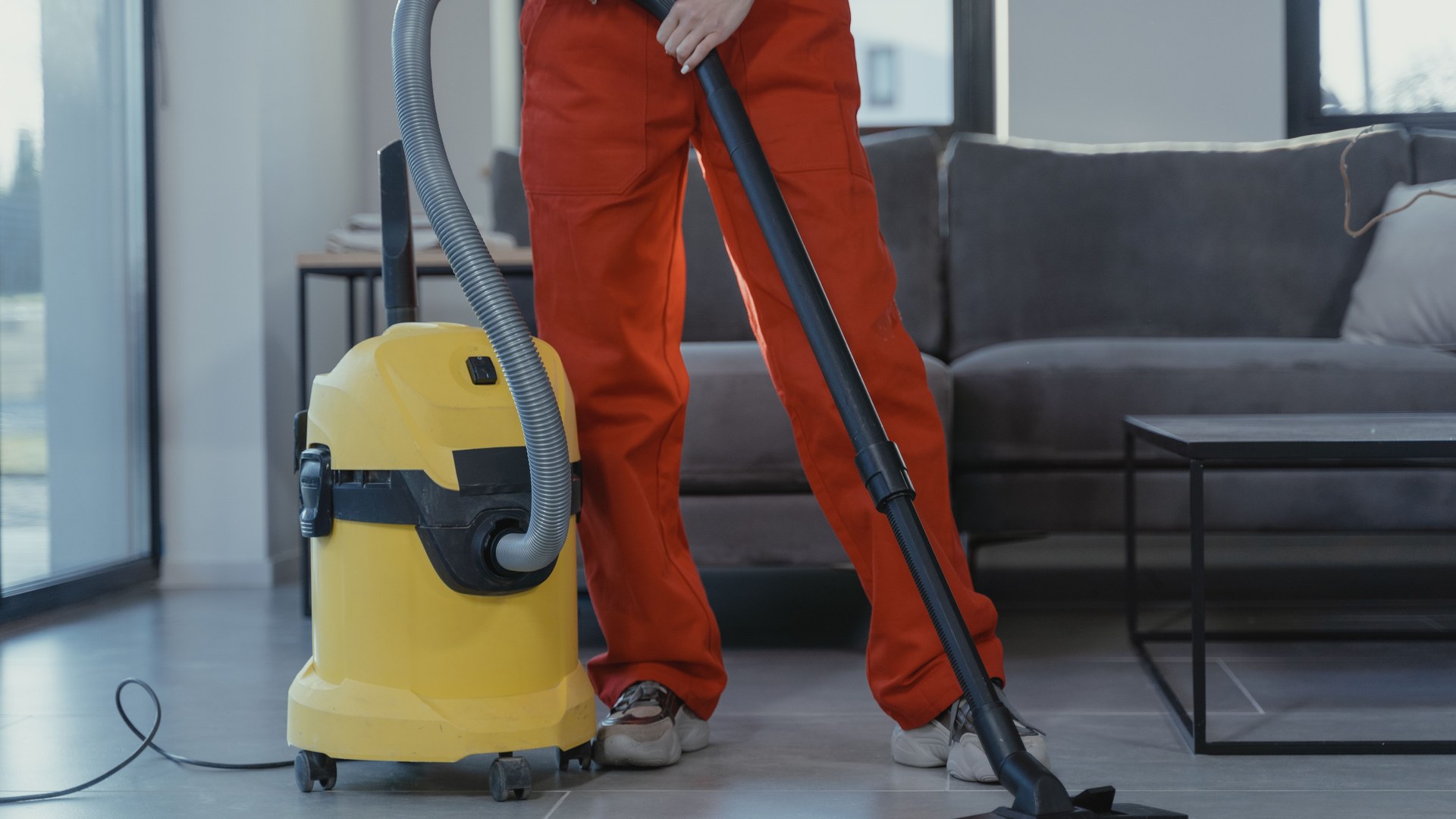
- Vacuuming with HEPA filtration, which captures the fine particles an ordinary vacuum just recirculates back into the room
- Stripping away protective materials left behind by the contractor such as floor protection sheets, corner guards, masking tape, and the protective film left on windows, glass panels and new appliances
The order matters. High surfaces get cleaned before low ones, so that anything dislodged from a ceiling fan or aircon vent falls downward onto the floor, where it will be picked up during the vacuuming step. Protective film and tape stay on until that point for the same reason: if you strip them earlier, you expose bare glass and fresh finishes to dust still falling from above.
Besides timing, the cleaning agents matter too. Tape residue on frames and glass needs a solvent to lift it, not scrubbing, which risks scratching surfaces that are only weeks old. Getting the sequence and chemistry right on new finishes is what makes a professional post-renovation cleaning different from a DIY pass.
Windows, Grilles and Tracks
Window tracks collect more construction residue than almost any other spot, yet they’re one of the most commonly skipped areas. Cement dust and grout residue settle directly into the track channels during works, along with whatever collects on the grilles and frames around them. Glass panes, cleaned inside and out where accessible, often carry paint splatter or adhesive spots that need removal, not just a wipe-down. Tracks left unaddressed are usually the first thing a close inspection turns up.
Kitchen
Kitchen cabinets need attention inside and out. This includes the tops of the upper units, where dust settles and rarely gets noticed until it’s disturbed. Countertops, the backsplash, the sink and taps, and the hob and hood surfaces carry grout haze on new tiling, adhesive marks on fresh cabinetry, and residue from the protective film on new appliances.
Cabinet interiors are also worth paying attention to. Anything left inside will be in direct contact with cookware and food storage, so the inside is as much a priority as the polished exterior.
Bathrooms
Bathrooms carry a similar pattern: tiles, grout lines, glass screens, sanitary fittings, mirrors and drains all need attention before daily use. New tiling typically shows cement and grout haze, fittings pick up water stains from installation testing, and silicone seals often carry residue along the join. Drains are easy to overlook but usually collect construction debris washed down during the works, and need clearing before the bathroom is ready.
Bedrooms, Living Areas and Built-Ins
Source: magnific/Magnific
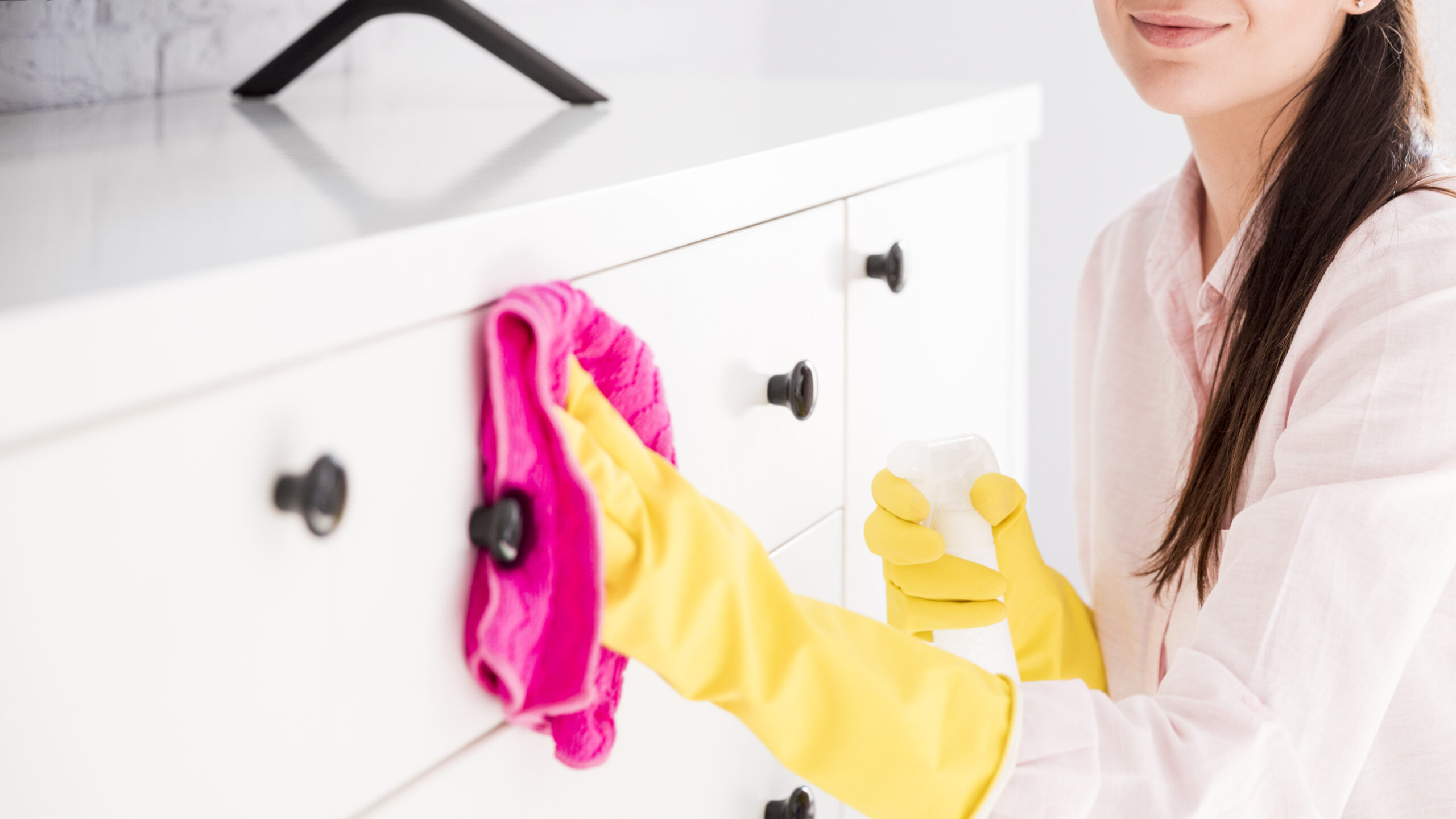
Wardrobes and built-in cabinets need their interiors cleaned along with shelving, skirting, switches, power points and door frames. Enclosed carpentry traps dust in a confined space during construction, so interiors also need thorough cleaning before use. Walls typically carry scuff marks and scratches from the works, which should also be addressed at this stage.
Floors
Floors come last for a reason: everything cleaned above them sheds downward, so cleaning the floor picks up all the remaining dust and debris. The sequence is vacuuming, then washing, then a treatment matched to the flooring type. Grout haze on new tiling and adhesive residue on vinyl both need handling that’s different from ordinary mopping.
The Part Most Checklists Leave Out
Every article on post-renovation cleaning lists surfaces. Almost none mention what’s still in the air after those surfaces are done.
Fine particulate remains suspended even after every wiped surface looks clean, settling gradually over the following days. Air-conditioning systems make this worse: they draw in and hold construction dust during the works, then redistribute it once the system runs normally again. New carpentry adds a second, separate problem. Adhesives, resins and fresh paint release formaldehyde and other compounds into the same air, a process that continues well after the smell fades.
This is why a unit can look spotless and still have poor air quality on the day of move-in, and lingering moisture from wet trades can set the stage for mould growth if it isn’t addressed early. Addressing it takes filtration and air treatment equipment, not more wiping, and where carpentry is extensive, a separate formaldehyde treatment runs alongside the clean. This treats the air the way the rest of the clean treats surfaces: directly, and based on what’s actually present.
How Post-Renovation Cleaning Differs From a Deep Clean
Though people often confuse them, a deep clean and a post-renovation clean solve different problems. Also known as an after-renovation cleaning service, post-renovation cleaning addresses construction residue: cement dust, adhesive marks and grout haze, plus formaldehyde still off-gassing from fresh carpentry. A deep clean, by comparison, covers what builds up over months of ordinary living: grease, limescale, embedded dust and allergens.
Cleaning services in Singapore aren’t always clear about the distinction, which is exactly why homeowners get confused when booking. A deep clean covers household grime, not cement dust or formaldehyde, so booking one for a freshly renovated unit can leave finer dust particles untouched. Where no renovation works have taken place, moving-in cleaning services are suitable.
Here is a simple breakdown of the two:
| Deep Cleaning | Post-Renovation Cleaning | |
| Situation | Scheduled maintenance for a lived-in space | Booked once, after renovation work is fully complete |
| Frequency | Every 3-6 months (recommended) | One-time, before move-in |
| What it targets | Grease, limescale, embedded dust and allergens from regular living | Construction residue plus formaldehyde from fresh carpentry |
| Scope basis | Property size and time since last clean | Extent of the renovation works, assessed on-site |
| Best fit | A home that’s been lived in a while and needs a refresh | A newly renovated space, before furniture and occupants move in |
When to Schedule It
The right time to schedule a post-renovation cleaning is after all contractor work is finished, including touch-ups, but before you move in furniture and belongings.
Touch-ups matter more than they seem to. Any remaining work generates dust the clean was meant to remove, which makes booking early counterproductive. On the flip side, cleaning around furniture that has already been moved in makes it difficult to reach every surface and forces the cleaner to manoeuvre around boxes and appliances.
When the schedule allows, try to leave some time between the clean and the move-in date. This gives dust a chance to settle so it can be cleaned easily. Check our move-in checklist to make sure you cover everything.
What to Expect From a Professional Post-Renovation Cleaning Service
Envico’s post-renovation cleaning services in Singapore start with an assessment, not a quote. Scope depends on the extent of the works, the unit’s size, the flooring involved, and whether the carpentry is extensive enough to need separate air treatment.
From there, every clean runs through the same four-point quality process, overseen by an on-site supervisor:
- Communication. The assessment sets the scope, with every step clearly outlined.
- Pre-service walk-through. Specialists walk the property with you, note any existing anomalies, and confirm the plan before work begins.
- On-site service. Safety checks and damage inspections run throughout, alongside the tasks agreed in the first two stages.
- Final walk-through. We check completed work against what was agreed, and carry out any touch-ups on the spot before handing the property back.
We match equipment and chemicals to what’s actually being removed. Filtration-equipped vacuums lift fine particulate, air treatment runs where the assessment calls for it, and formaldehyde inhibitors are applied to built-in cabinets as standard, with a fuller formaldehyde treatment available alongside the clean where the carpentry is more extensive. Cleaning agents are also selected with care: chemicals are handpicked after several rounds of testing for effectiveness, toxicity, odour, corrosiveness, residual effectiveness and eco-friendliness.
Lastly, none of this holds without trained people. Every consultant, specialist and member of the cleaning crew completes 160 hours of training under Envico’s in-house trainers, on top of WSQ certification and further on-the-job training in their first month. They are trained to provide a thorough, efficient clean that any client would be happy with.
Book a Post-Renovation Cleaning Assessment with Envico
What a unit needs depends on the extent of the work behind it, which is why assessment comes first. Envico is NEA-licensed, with WSQ-trained crews and HEPA filtration and air treatment equipment built for this kind of work. A walk-through before and after is standard practice, and we select chemicals for the new surfaces and the people moving into the space, including households with children, pets or allergy sensitivities.
Where carpentry is extensive, formaldehyde treatment and other air-side work can run alongside the clean itself, addressed together rather than as a separate booking down the line. Book a post-renovation cleaning assessment with Envico, and we’ll walk the space with you before recommending a scope, so the plan matches what’s actually in the unit.