

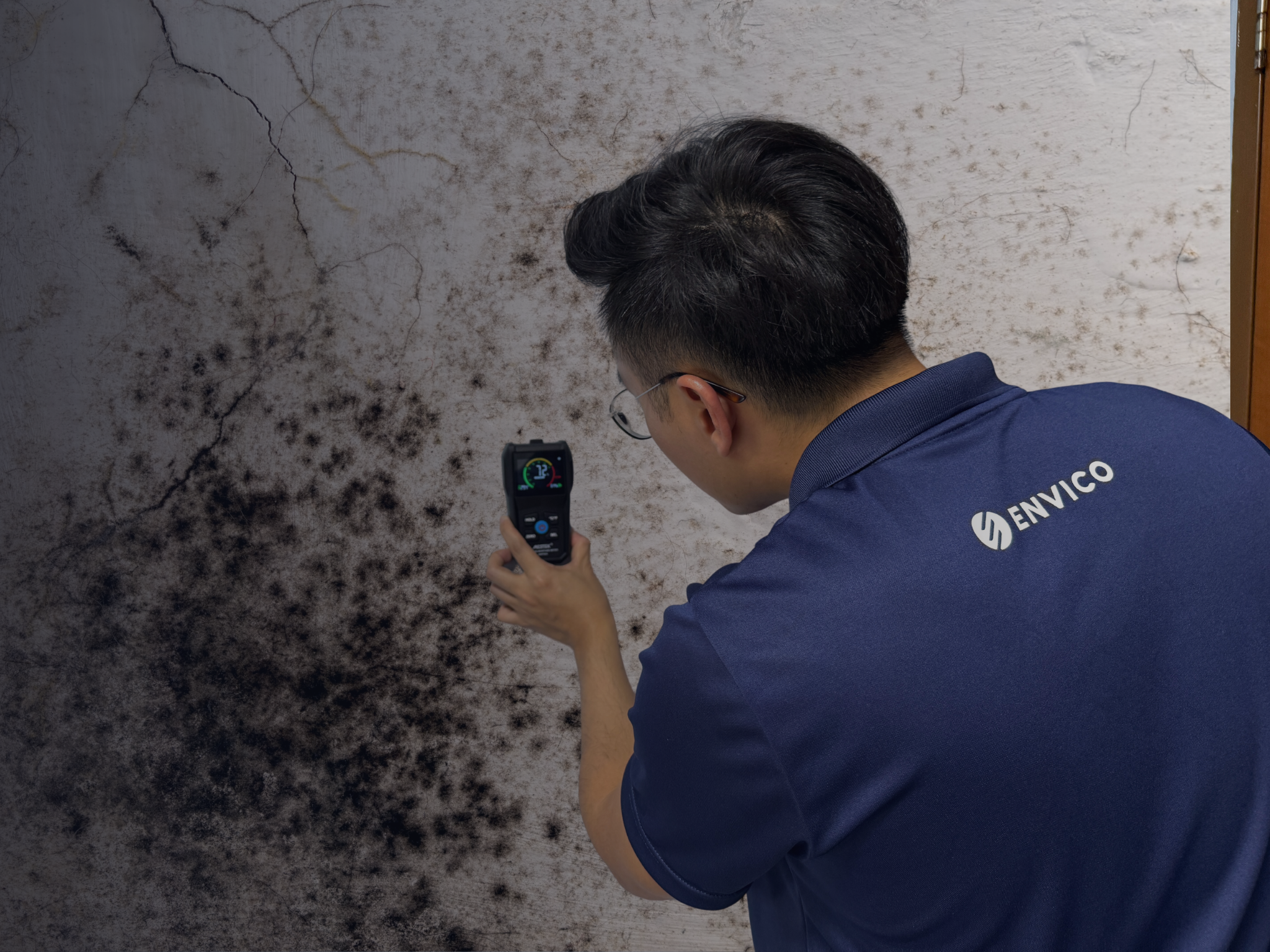
Mould growth is a common issue in humid climates like Singapore. It often appears as black or dark spots on walls, ceilings, furniture, or fabrics, and may be accompanied by a musty smell. If not addressed early, mould can spread quickly and damage materials such as wood, drywall, upholstery, and carpets.
Below are several key steps to help remove mould safely and prevent it from spreading further.
1. Discard Severely Mould-Damaged Items
The first step is to assess which items can be salvaged and which should be discarded.
Items that are heavily contaminated or porous—such as cardboard, paper, insulation, or severely mould-infested fabrics—may not be recoverable. In these cases, it is often safer to discard the items to prevent mould from spreading to other areas.
For items that are lightly affected, such as furniture surfaces or certain household items, they can often be cleaned and restored with proper mould removal procedures.
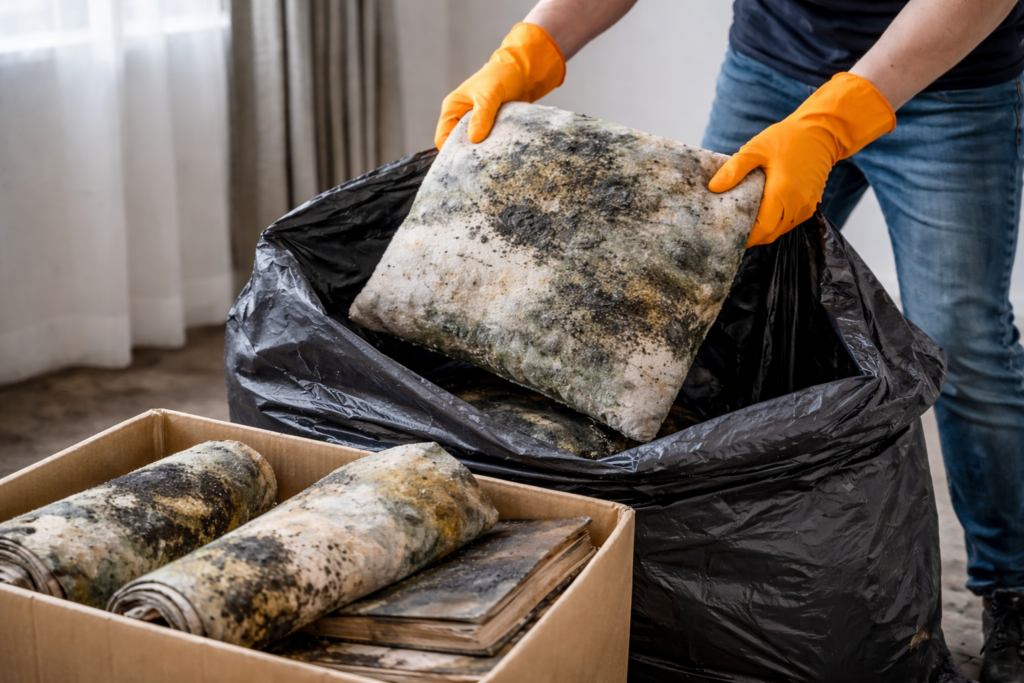
Discarding affected mouldy items
2. Vacuum the Affected Area Using Proper Filtration
Before wiping or cleaning mould, it is helpful to vacuum the affected surfaces and surrounding areas.
Vacuuming helps to:
- Remove loose mould particles
- Reduce the spread of spores during the cleaning process
- Extract mould fragments from surfaces
Ideally, a HEPA-filtered vacuum should be used, as it can capture very fine particles and mould spores that ordinary vacuums may release back into the air.
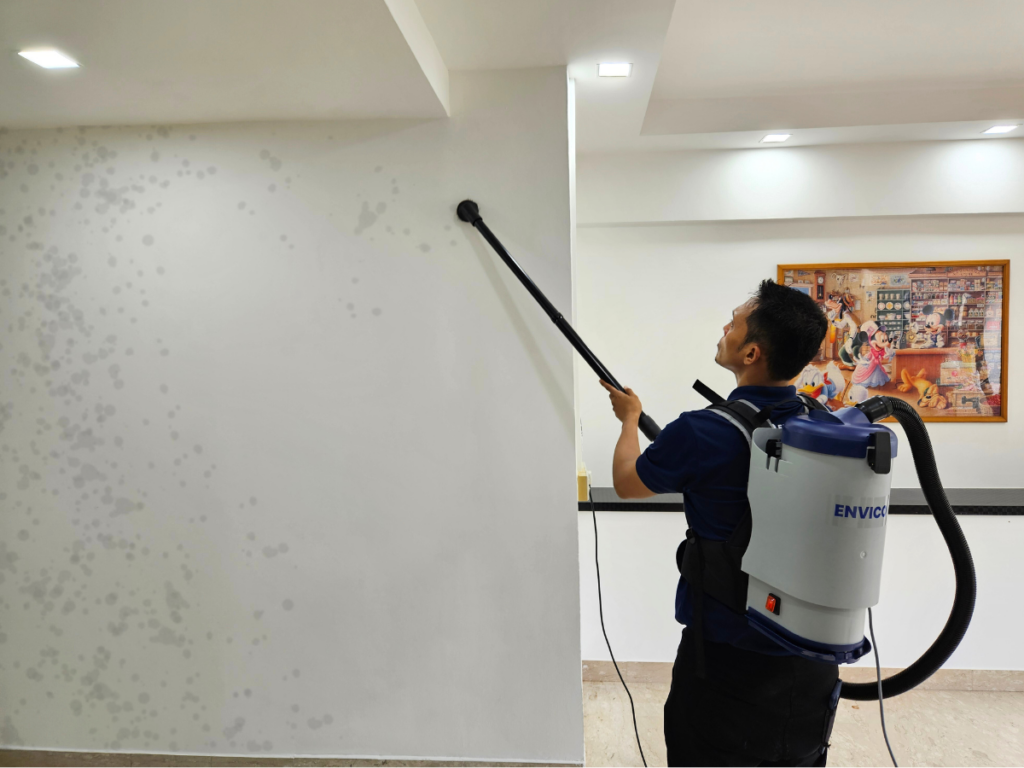
Envico: Mould extraction from contaminated wall.
3. Clean Surfaces With a Mould-Killing Solution
After vacuuming, contaminated surfaces should be wiped down with a suitable mould-removal chemical or disinfectant.
These cleaning solutions help to:
-
Kill mould colonies
-
Destroy mould spores on surfaces
-
Reduce the chance of regrowth
It is important that the cleaning solution used is strong enough to eliminate mould and its spores, yet safe for the material being treated. Surfaces should then be wiped thoroughly and allowed to dry completely.
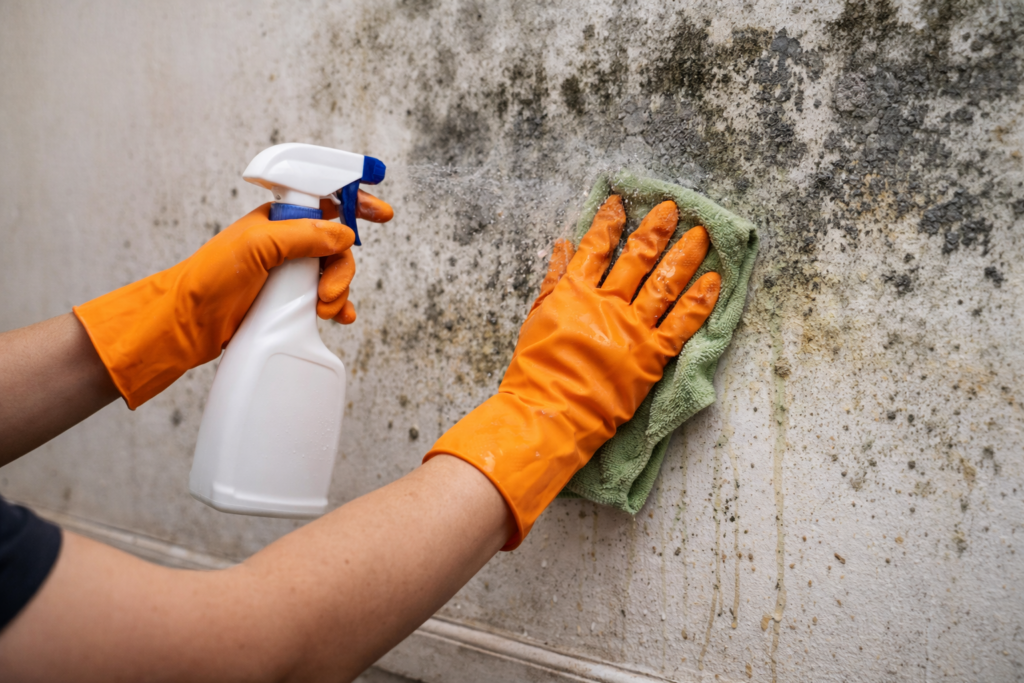
Wiping Mould
4. Upholstery and Fabric Items May Require Professional Cleaning
Mould that grows on upholstery, mattresses, carpets, and fabric furniture can be more difficult to remove because mould can penetrate deep into the material.
Professional upholstery or carpet extraction cleaning is often recommended in such cases. However, it is important to note that some mould stains may remain visible, as mould can permanently damage or discolour the material fibres.
The goal of professional cleaning is to remove mould contamination and spores, even if cosmetic staining cannot always be fully reversed.
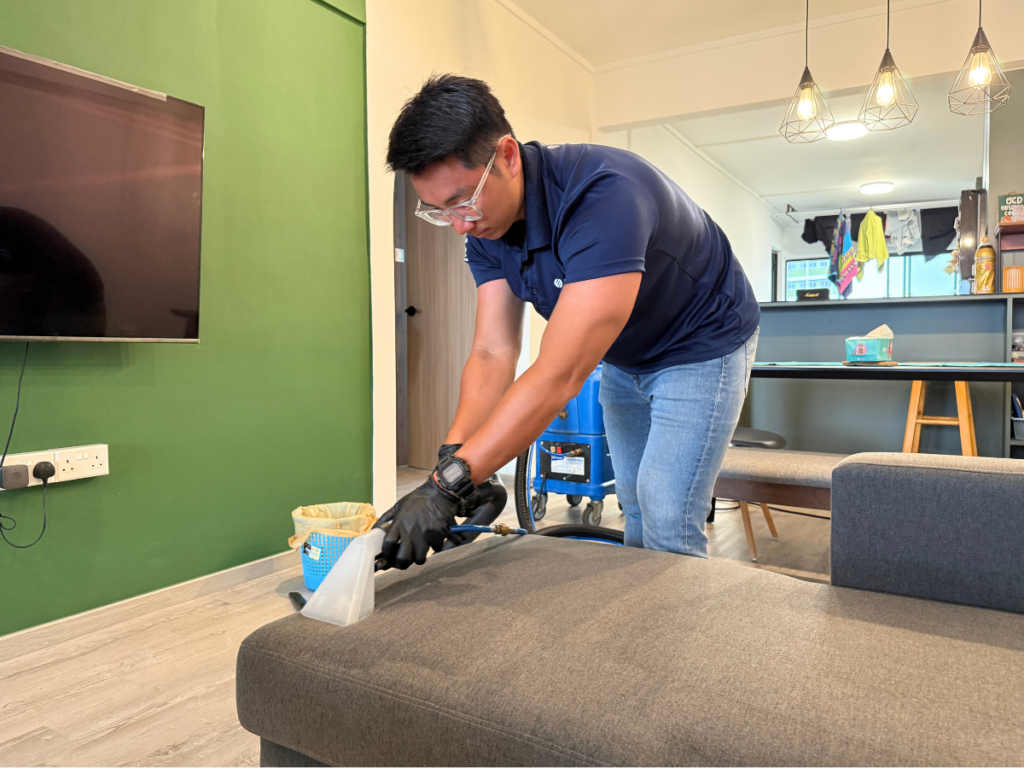
Envico: Fabric sofa mould removal
5. Remove Airborne Mould Spores to Prevent Regrowth
One commonly overlooked step in mould remediation is air treatment.
During mould growth and removal, microscopic mould spores become airborne and can settle on other surfaces. Even after visible mould is removed, these spores may remain suspended in the air or deposited in the environment.
If the underlying humidity conditions return, these spores can germinate and cause mould to grow again.
For this reason, professional mould remediation often includes air filtration, air scrubbing, or ozone blast treatment to remove airborne spores and improve indoor air quality.
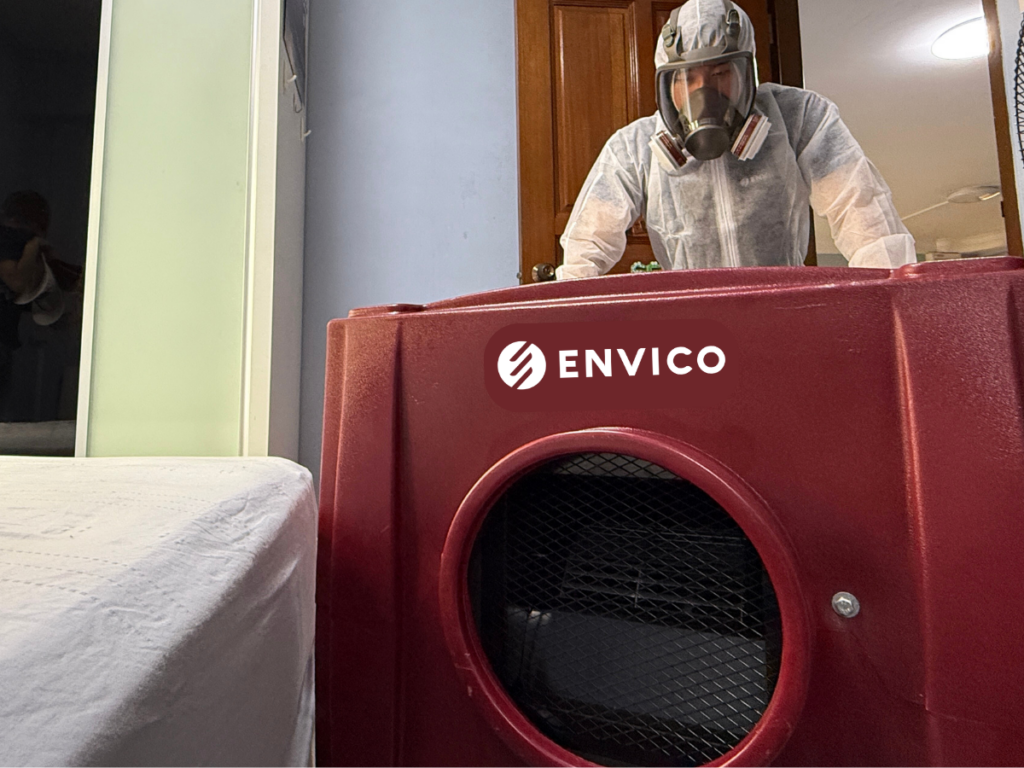
Envico: Removing mould spores
Professional Mould Removal in Singapore
While minor mould growth may sometimes be cleaned with proper precautions, larger infestations or recurring mould problems often require professional treatment.
At Envico, we provide specialised mould inspection, mould treatment, and mould removal services in Singapore, using professional equipment and remediation methods to safely eliminate mould and help prevent recurrence.
If you notice persistent mould growth, strong musty odours, or recurring mould spots, it may be time to consult a professional mould removal specialist.
Speak to our friendly Consultant today and schedule a mould inspection for your property.