

Source: magnific/Magnific
Regular cleaning keeps a home presentable: wiping surfaces, vacuuming floors and managing daily mess. Deep cleaning goes further, removing buildup regular cleaning skips, such as grease buildup, dust on top of cabinets and dirt in overlooked corners. Most Singapore homes need regular cleaning weekly or fortnightly, and deep cleaning every three to six months, or after a specific trigger.
What Regular Cleaning Actually Covers
Regular cleaning keeps pace with the mess a home or office generates day to day, not resetting a space neglected for months. It works on a short cycle, so it removes only what has settled since the last visit.
The scope stays surface-level by design:
- Wiping down counters, tabletops, and switches
- Vacuuming and mopping floors
- Keeping bathrooms and kitchens hygienic
- Managing bins
- General tidying so a home or office looks neat
In Singapore’s climate, that light surface routine matters, as humidity and food odours build so quickly that skipping even a week can make a kitchen or bathroom feel neglected.
What regular cleaning does not do is reach what has accumulated over a longer stretch. A weekly or fortnightly clean removes this week’s dust and this week’s grime. It was never scoped to strip grease that has hardened behind a stove, lift grout haze that has darkened over several months, or clear the dust that has packed itself into a vent. That is a different job with a different timeline, which is exactly where deep cleaning comes in.
What Deep Cleaning Actually Covers
Deep cleaning targets buildup that has accumulated for months, sitting behind, under and inside fixtures that regular cleaning was never meant to reach. The mechanism is different from regular cleaning, not just a longer version of it, because the job is removing embedded grime and not surface dust.
The scope reflects that difference. A full house deep cleaning covers:
- Appliance interiors and exteriors
- The reachable space behind and under furniture
- Skirting boards
- Light switches
- Window tracks
- Grout and tile scrubbing in bathrooms, kitchens and any tiled area
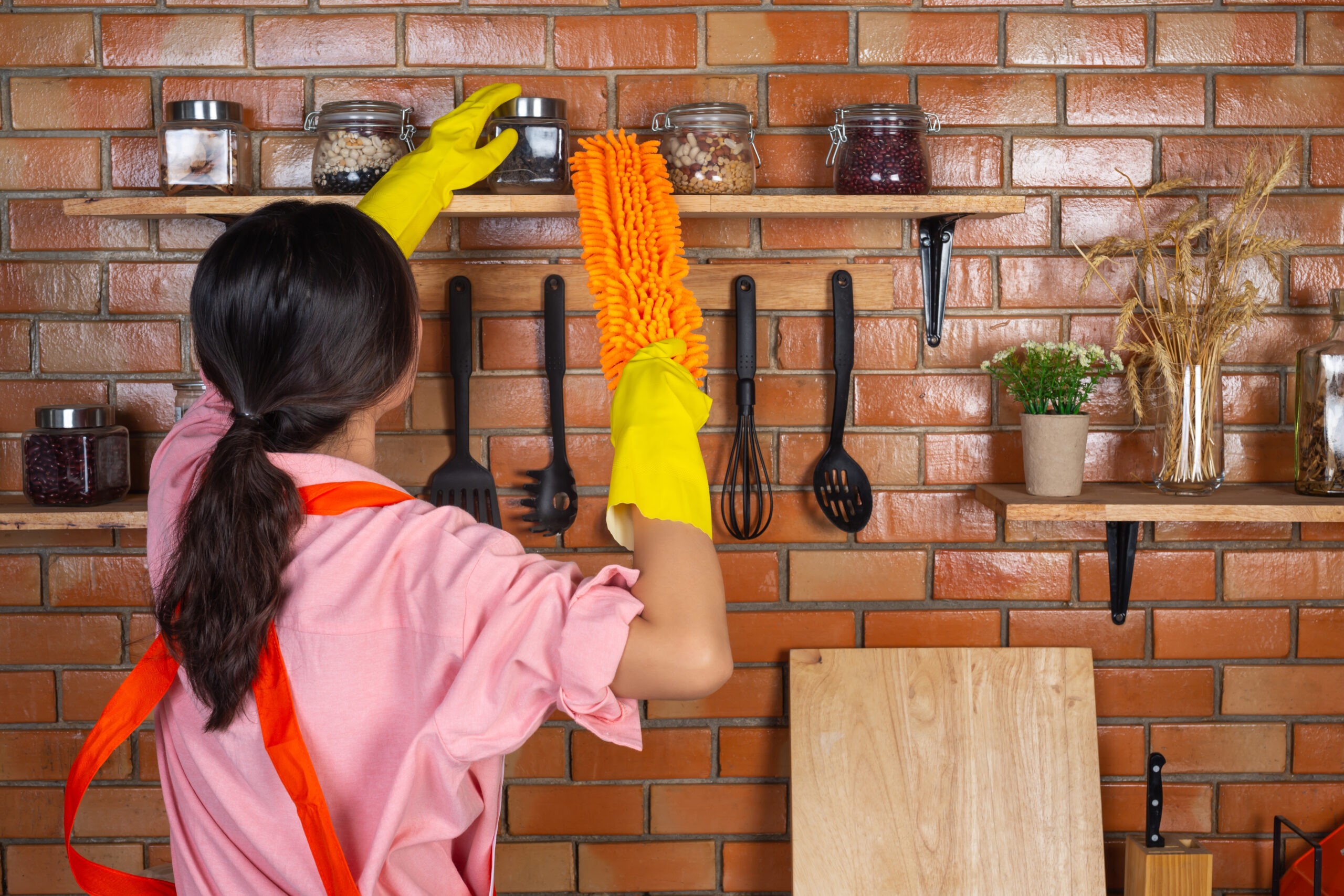
Professional house deep cleaning also usually includes areas that never get cleaned normally: the top of kitchen cabinets, behind wall-mounted televisions, and the gap between a fridge and the wall. The work also needs different tools, such as crevice attachments, industrial-grade degreasers and filtration equipment that a routine cleaning kit doesn’t include.
The distinction that actually matters here is how long the mess being addressed has been building up. A regular clean, however careful, is still working against days. A deep clean works against months, which is why it needs different tools and more time to do properly.
Why the Two Get Confused
Part of the confusion comes from how loosely the cleaning industry uses these terms. Some providers market an especially thorough regular clean as a “deep clean” without actually changing the scope of work, blurring the line even further.
The distinction lies in the dirt being addressed, not the nature of the visit. A regular clean, done well, addresses days of use. A deep clean addresses months of accumulated dirt and grime in places regular cleaning tools are not designed to reach.
The Part Most Comparisons Leave Out: Indoor Air Quality
Most comparisons between regular and deep cleaning stop at surfaces, and that’s exactly where they miss something that matters just as much. Dust, skin cells and fine particulate build up continuously inside air conditioning systems, carpet fibres and upholstery, regardless of how clean every visible surface looks on a given day.
This is the fraction a surface-only deep clean leaves untouched. Wiping, vacuuming and mopping remove what has settled on a surface. They don’t address what’s suspended in the air or embedded deep in fabric, which is why a home can look genuinely spotless and still have air quality that doesn’t match what the eye sees. Singapore’s humidity adds to this, keeping conditions favourable for dust mites and mould spores to persist in fabric and ductwork for longer than in drier climates. Air quality depends on what’s actually filtered out of circulation, not on how clean a surface looks, and that requires equipment built to capture fine particles.
Envico’s deep cleaning treats this fraction directly, using HEPA-filtered equipment to capture the fine particulates that ordinary cleaning tools simply redistribute around the space. The aim is to address what’s in the air alongside what’s on the surface, without assuming a clean-looking room means the air in it is clean too.
How to Tell Which One You Need
Source: jcomp/Magnific
Deciding between the two comes down to matching the service to the actual state of the space.
Regular cleaning is enough when the home or office is already cleaned frequently, there’s no specific problem to solve, and the goal is general upkeep rather than resetting anything.
Booking house deep cleaning services makes more sense in a few recognisable situations: moving into or out of a unit, an illness that’s been through the household, six months or more since the last deep clean, visible grime or a lingering odour that regular cleaning hasn’t shifted, or allergy symptoms that have been creeping up without an obvious cause.
For a side-by-side reference:
| Regular Cleaning | Deep Cleaning | |
| Frequency | Daily, Weekly or fortnightly | Every 3 to 6 months, or after a trigger |
| Typical scope | Surfaces, floors, bathrooms, kitchens, bins | Appliances, reachable spaces behind and under furniture, vents, grout, window tracks |
| Tools and chemicals | General-purpose cleaners, mop, vacuum | HEPA-filtered equipment, targeted degreasers, grout and tile scrubbing |
| Typical duration | 1 to 2 hours | Half a day to a full day, depending on unit size |
How Often Should You Deep Clean?
Most homes do well with a professional deep clean every three to six months. That’s a range rather than a fixed interval, because the variables that affect it aren’t the same for every household.
Pets shed and track in more than most people realise, which shortens the interval on its own. Young children make a different kind of mess than adults do, and allergy sufferers benefit from a shorter gap because dust and dander accumulate between visits regardless of how tidy a home looks. Offices with high foot traffic go through the same interval faster than a quiet residential space does. A household with a toddler and a shedding dog, for instance, may find three months a better fit than six.
None of this means every home needs the same schedule, and no single number will fit every household equally. It means the right interval depends on who’s using the space, how often it is used and why.
What to Expect From a Professional Deep Clean
What separates a genuine deep cleaning service in Singapore from an extra-thorough regular clean is what happens before anyone picks up a cloth. Envico’s consultants assess the space first, because the scope depends on variables that differ from one home to the next: unit size, flooring types, and how long it’s been since the last deep clean. That assessment is what determines the plan. Consultants also flag anything beyond routine deep cleaning during the walk-through, such as early signs of mould, so it can be addressed as its own service.
From there, the work itself uses equipment matched to what it’s removing. HEPA filtration handles the fine particulate that ordinary vacuuming disturbs cannot handle. Chemical selection follows the same logic: stronger degreasers where kitchen buildup calls for it, gentler pH-neutral options for homes with young children, pets or allergy sufferers.
Envico’s WSQ-trained crews work through a set sequence built around this, so the treatment matches both the surface being cleaned and the people living with the result.
Book a Deep Cleaning Assessment with Envico
The right frequency and scope will never be the same for every home, which is why an assessment comes before the deep clean itself, not after. Envico offers a full range of cleaning services in Singapore, from routine upkeep to deep cleaning, disinfection, and specialist treatments; it is NEA-licensed, works with WSQ-trained crews, uses HEPA filtration equipment for fine particulates, and selects chemicals to suit both the surface and the people living with it.
If it’s been a while since your last deep clean, or you’re not sure which service actually fits your situation, book a deep cleaning assessment and we’ll walk the space with you before recommending a scope.