

Source: stefamerpik/Magnific
Whenever a new wave of Singaporeans collects the keys to their BTO, the same complaints start doing the rounds: among them persistent reports of a ‘new furniture smell’ that will not budge no matter how often you wipe and spray. In most cases, that conversation is actually about formaldehyde: a colourless gas with a sharp smell, used in the resins that bind engineered wood and in many adhesives, coatings and finishes.
Formaldehyde in the home comes from new carpentry, adhesives and furniture, and it will not clear on its own. Ventilation helps, but slowly, and only for what has already escaped into the air. Professional treatment brings formaldehyde readings down to a safe level using chemicals and methods not available over the counter. It does not stop the off-gassing process itself: homes still need regular ventilation afterwards, because the source keeps releasing formaldehyde until curing is complete.
Where Formaldehyde Comes From in a Singapore Home
Formaldehyde is a colourless gas with a sharp smell. It shows up in the resins that bind engineered wood, and in many adhesives, coatings and finishes used across a typical renovation. These materials release it as a gas over time. Because it isn’t a one-time deposit on a surface, wiping and airing out the room won’t address the root cause.
Built-in Carpentry and Wardrobes
Built-in carpentry is the largest formaldehyde source in most local homes, since custom carpentry is common in Singapore renovations. Wardrobes and storage units are typically built from particleboard, plywood or MDF bonded with a formaldehyde-based resin. A full wall of built-ins releases far more than a single cabinet, and enclosed interiors concentrate whatever is given off, which is why the smell is strongest the moment you first open a wardrobe.
Kitchen Cabinetry
Kitchen cabinetry uses the same bonded materials as the rest of a home’s carpentry. Two things make the smell worse in kitchens: they run hotter than the rest of the home, and heat increases the rate of release. Cabinets under a hob or oven are especially bad, combining heat with a tight, enclosed space.
New Sofas, Mattresses and Upholstered Furniture
This source is less obvious, but the mechanism is the same one at work in carpentry: assembly adhesives, some foam formulations, and fabric finishes that fix dye and resist creasing, all produce the compound.
Freshly Painted Surfaces
Paint used to be worth naming as its own source, but that has changed. Since 1 January 2026, interior paints containing added formaldehyde can no longer be sold in Singapore, which we cover in detail below.
Adhesives, Laminates and Flooring
Vinyl and laminate flooring, wallpaper adhesive and panel bonding all rely on adhesives that can off-gas formaldehyde the same way carpentry does. This is a smaller contribution, but a homeowner who re-floors without touching any carpentry can still end up with a measurable source at home.
Why Smell Is a Poor Guide
The ‘new furniture smell’ that lingers after a renovation is a mixture of compounds, including formaldehyde. The human nose adapts to a constant odour quickly, so occupants stop noticing what a visitor detects the moment they walk in.
That matters because the absence of bad odours is not evidence that the air is clear. Odour and contamination are two separate problems that often get conflated, and a smell that persists well after renovation may be a distinct issue that calls for dedicated odour removal services.
What Singapore Regulation Actually Says
Singapore now regulates formaldehyde in interior paint directly. Since 1 January 2026, interior paints containing added formaldehyde cannot be sold here. The substance is regulated as hazardous under the Environmental Protection and Management Act, with content required to stay below 0.01 per cent of paint weight, verified through test reports from accredited laboratories.
That ban covers paint only. Composite wood products and adhesives, the larger source in a renovated home, are not covered. NEA has stated it is actively reviewing potential regulation for other interior building products, so this position may change.
There is also a standing indoor air quality standard to measure against. SS 554, the Singapore Code of Practice for Indoor Air Quality, sets formaldehyde in air-conditioned spaces below 0.1 mg per cubic metre, aligning with the World Health Organization guideline over a 30-minute exposure period. On health, prolonged exposure is linked to respiratory discomfort and an increased risk of certain diseases.
For material selection, look for two certification schemes: the Singapore Green Labelling Scheme and Singapore Green Building Product certification, both encouraged by NEA and the Ministry of Sustainability and the Environment.
How Long Formaldehyde Off-Gases For
There is no fixed date on which formaldehyde stops off-gassing. Emissions are highest when a material is newest and decline gradually, but the tail is long, often stretching across months rather than weeks. In some cases, it may even take years.
Singapore’s climate makes this worse. Heat and humidity both increase the rate of release, so a warm, closed, unoccupied unit is close to the worst case: high release with no air exchange to carry it away. When the home is locked up with all windows shut between renovation and move-in, it accumulates in the same closed, humid conditions that let mould take hold.
The real question underneath this is whether it is safe to move in shortly after a renovation finishes. Honestly, it depends on the volume of new material, the ventilation available, and who will be occupying the space. No safe waiting period applies to every renovation, which is why it is worth consulting a professional on the timelines.
What You Can Do Yourself
Source: Thirdman/Pexels
For homeowners searching for how to remove that formaldehyde smell from a wardrobe, a sofa, or any other piece of new furniture, there are several things that may genuinely help. It is worth noting upfront, however, that none of these treats the source: they manage what is already in the air, not the material that keeps producing it.
Ventilation
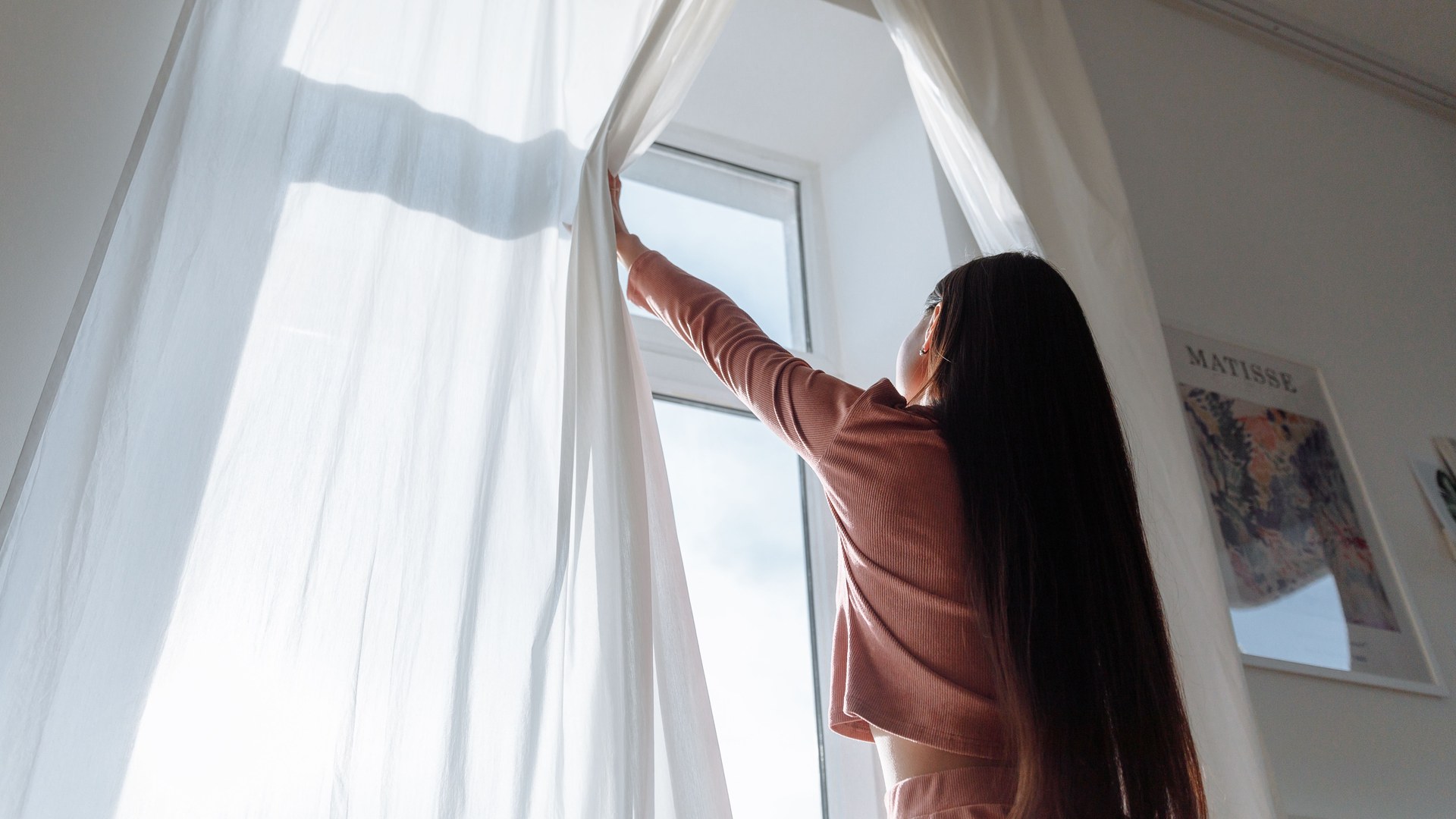
Ventilation is the most effective thing available to a homeowner. It dilutes and removes formaldehyde already released into the air. Done properly, that means:
- Cross-ventilating the whole unit rather than relying on a single open window
- Running fans to actively move air, not just leaving openings still
- Opening cabinet and wardrobe doors so enclosed interiors get the same exchange as the rest of the room
The limitation is straightforward: ventilation can’t affect the material; it only moves the air around it. If the material is still releasing gas, concentrations rebuild once the unit closes up again.
Heat and Airing Cycles
Because higher temperature accelerates release, some homeowners run heat cycles deliberately to bring emissions forward and flush them out sooner.
Air Purifiers with Activated Carbon
A purifier with an activated carbon stage can absorb some gaseous compounds as air passes through. HEPA filtration alone captures particles, not gases, so the carbon stage is what actually works against formaldehyde, and there is a limit to what it can soak up.
Treating New Furniture Before It Comes Indoors
Airing new furniture before it enters the home, leaving drawers and wardrobe doors open for the first few weeks, and avoiding sealing new pieces in a closed room all help. However, a piece that no longer smells new may still be releasing formaldehyde, as odour and gas emissions are two different considerations.
What Professional Formaldehyde Treatment Involves
Professional formaldehyde treatment in Singapore starts with an assessment: identifying the likely source materials, how much new carpentry is involved, how the unit is ventilated, and who will occupy it.
Source treatment is the differentiator. Unlike DIY methods, which affect the air and not the material, professional treatments are applied directly to the materials releasing the gas. Chemicals are selected carefully based on the material being treated and the people occupying the space afterwards, which matters with children, pets or allergy-sensitive residents. Air filtration and scrubbing equipment runs alongside source treatment, removing what is already airborne while source treatment handles what is still to come. Envico supports this with pre- and post-treatment HCHO air quality testing and provides documented readings for comparison.
What separates formaldehyde removal services from a DIY fix is the sequence above: assessment before any product is applied, treatment aimed at the source rather than a single pass with an air freshener, and equipment capable of handling airborne formaldehyde.
Deciding Which Route Is Right for Your Home
Ventilation and time suit limited new carpentry, a unit that airs properly, and no pressure to occupy quickly. Professional treatment suits carpentry spanning multiple rooms, a short move-in window, more vulnerable occupants, or symptoms already appearing.
| Factor | Ventilation and time | Professional treatment |
| Amount of new carpentry | Limited, one or two pieces | Extensive, across multiple rooms |
| Time before move-in | No pressure to occupy quickly | Short window before occupancy |
| Occupant sensitivity | No particular vulnerability | Children, pets or allergy-sensitive residents |
| Current symptoms | None reported | Irritation already appearing |
What an assessment establishes that guesswork cannot: which materials are the actual source, and how much of the problem is airborne versus still locked in the material.
Book a Formaldehyde Assessment with Envico
The right approach depends on the space, which is why assessment comes before treatment. Envico is NEA-licensed, with an in-house research and development team behind its formaldehyde and indoor air quality programmes, industrial-grade air filtration and scrubbing equipment, and WSQ-trained crews carrying out the work. We select chemicals to suit both the material being treated and the people who will live with the result, and schedule around your household or workplace, including after-hours and weekend slots, with a dedicated account manager overseeing your case from start to finish.
For homeowners weighing up professional cleaners against a DIY approach or looking for formaldehyde removal that treats the source, book a consultant assessment, and we will walk the space with you before recommending a scope.